TECHSTITUTION 3.0 CERTIFICATION EVENT ROUND I – GROUP II AND GROUP III

Another Project milestone reached today as we mark the end of two additional groups receiving ICT training as part of the Techstitution Project. So far, enthusiastic learners have been working on developing the Open Contracts Platform for two additional Municipalities. Open Contracts Platform is crucial to tackling democratization challenges in Kosovo, by enabling citizen access to public contracts. You may find the amazing work of the Techstitution participants below: Vlera’s Platform Diellza’s Platform Fitore’s Platform

Date: 29 August 2019

TRANSPARENCY AND CITIZEN PARTICIPATION IN THE PARLIAMENT

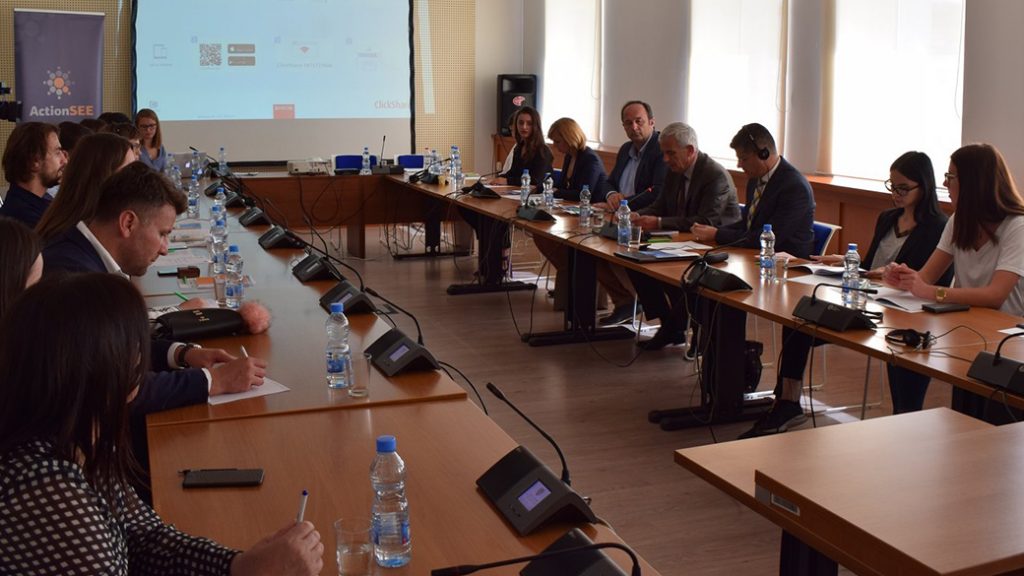
Open Data Kosovo presented the analysis of “Parliamentary openness in Kosovo and in the region” analyzing the transparency, openness, and accountability of the legislative power in the Western Balkans region. The analysis is based on the annual Regional Openness Index where all public institutions are part of the measurement. 117 indicators divided into four components measured institutional openness. These four components are – Accessibility, Awareness, Integrity and Transparency. The survey of 2018 on parliamentary openness ranks Montenegro in the first place with a score of 79%. Kosovo occupies the second place with a score of 73%, and Albania ranks third with a score of 71% in the Western Balkans. Research findings show that the openness in the domain of Transparency increased at the level of the whole region, with the exception of the Parliament of Albania with a decline of 9% since 2017. Accessibility to citizens, however, is in stagnation, scoring regional average of 61% since 2016. The parliament of Kosovo scored 80% on Awareness securing second place, 82% on Integrity, sharing second place with Albania, 78% on Transparency, surpassed only by Montenegro, and 55% on Accessibility. The low score on the latter principle paved the way for this to be the focal point of the panel discussion, in an attempt to strengthen the Parliaments weakest link. The Kosovar Parliament with its relatively low score on Accessibility places Kosovo on the bottom of the list compared to the other regional countries in the Western Balkans, surpassing only Bosnia and Herzegovina. The opening speech was delivered by Secretary General of the Assembly of Kosovo, Ismet Krasniqi. Subsequently, a presentation of the strategy for Communication and Information was delivered by Musli Kranisiqi – Director of the Office for Media and Public Relations at the Kosovo Assembly. Thereafter, the project coordinator of ActionSEE, Blerina Ramaj, presented the findings of the analysis concerning openness and accessibility of the Kosovo Parliament in comparison to the region. Lastly, the event culminated with talks about Transparency and Communication by Alexander Chavarria – Director of National Democracy Institute, Besnik Vasolli – Communications Component Manager at GIZ, BnS Europe&KLSC and Jetmir Bakija – Program Manager at Democracy+. The Strategic Planning and Coordination Officer of the Assembly of Kosovo, Shqipe Krasniqi, moderated the panel discussion. The event’s participants consisted of NGO representatives from Transparency Forum of the Assembly, media, journalist, and international organizations This analysis is the third of its kind, and part of the project “Transparency, Technology and Institutional Openness in the South East Europe Region” – ActionSEE, implemented in the Western Balkans and funded by the European Union.

Date: 16 September 2019

COWORKING – SHOULD I BECOME A FREELANCER?

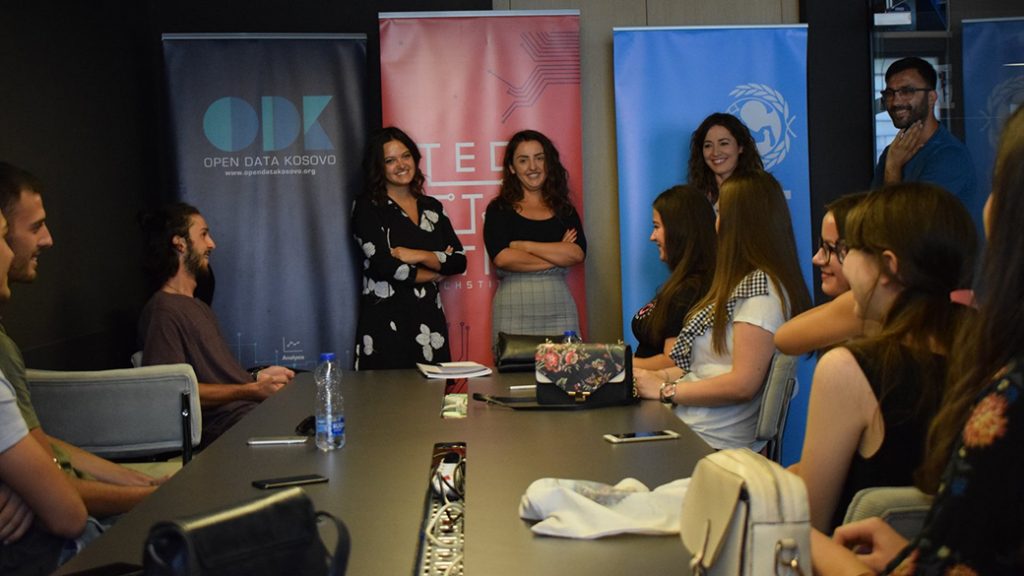
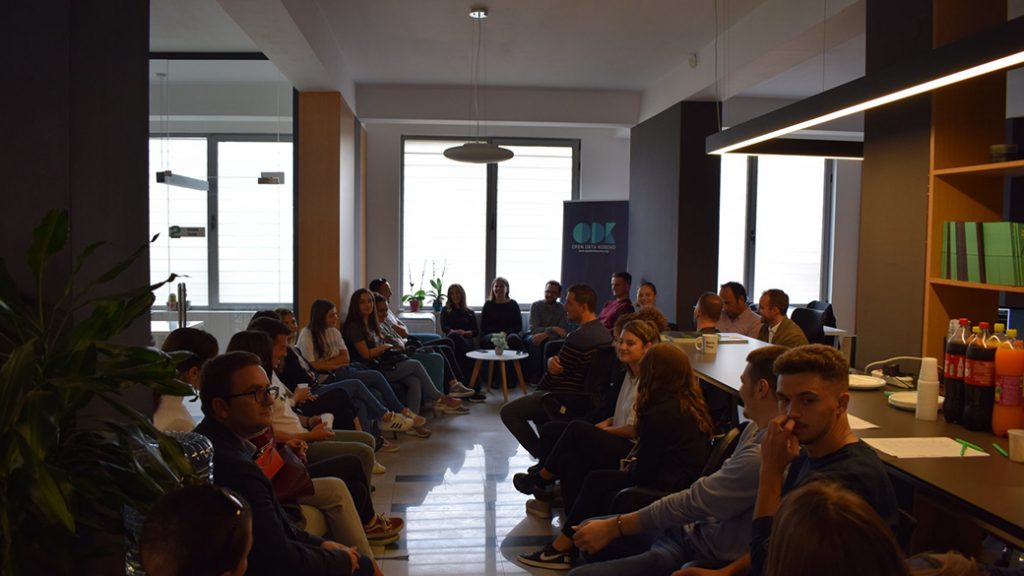
The freelancer community event hosted by Open Data Kosovo and Haptaz Coworking unfolded with a success. We enjoyed open discussions, networking, and lots of pizza, while showing ODK’s cool office space to young professionals who consider renting co-working spaces as they build up their careers. Endless WiFi, water, office utilities etc. are included in ODK’s prices. Present were ICT enthusiasts, NGO representatives, and freelancers who expressed the different issues that they face in the freelancing sector. Such issues were taken into consideration by ODK and Haptaz for future events organization. For more information on ODK Co-working, go to: https://odk-coworking.habu.co/users/

Date: 26 September 2019

THE FUTURE WORKPLACE

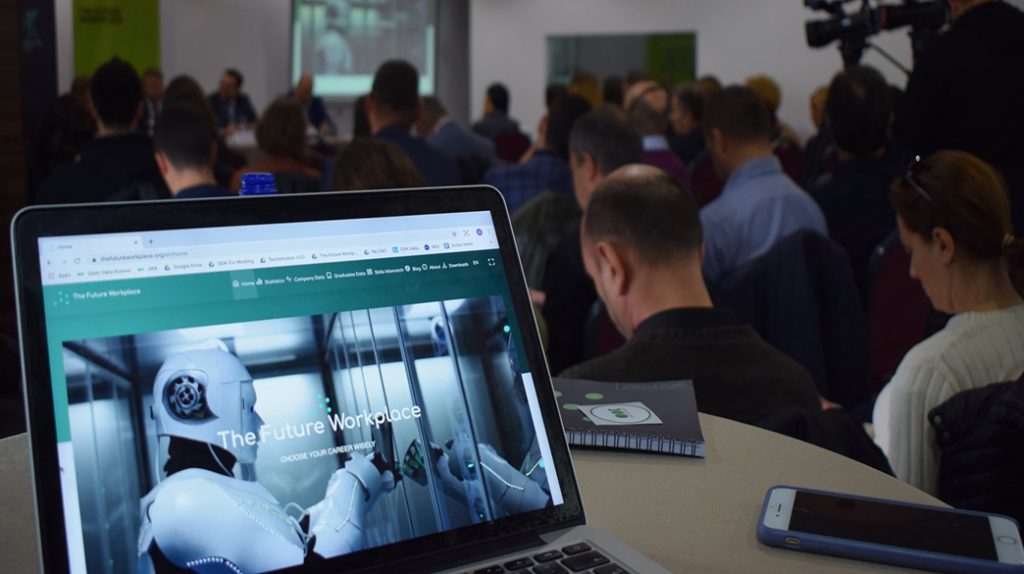
Open Data Kosovo in cooperation with Kosovo Chamber of Commerce launched The Future Workplace platform which analyzes the ICT market in Kosovo.
The aim of the “The Future Workplace” platform is to address the vast gap in the amount of knowledge available in regards to the ICT market in Kosovo. Since the ICT sector has been widely cited as a field of great potential for Kosovo, this digital tool enables a comprehensive analysis of the ICT market to be based upon to enhance further development. In addition, the data presented is available for each user to download and use for different porpuses with the aim to enhance data based decision-making.

The opening remarks of the platform were held by Blerta Thaci- Executive Director, ODK, Berat Rukiqi-Head of the Kosovo Chamber of Commerce and Petrit Selimi – Chief Executive Officer of MFK. Firstly, Blerta Thaci emphasized that “Future Workplace” platform provides opening data of the ICT sector in Kosovo in order that this sector which holds great potential, to drive Kosovo’s economic development.
While Berat Rukiqi, Head of the Kosovo Chamber of Commerce emphasized that by sharing data to the public this platform provides a proper analyze of the ICT market.
Afterwards, Petrit Selimi – Chief Executive Officer of MFK talked more about the “Dig Data Challenge” and how this challenge enabled data analysis from different sectors in order to encourage decision-making based on data, including here “The Future Workplace” platform.

Paulina Behluli – Design and Outreach Officer, ODK presented the platform to the audience and shared the following data from the platform:
-In the last 10 years registration of the businesses in the ICT sector has increased by 187%.
-Within 5 years, the number of the graduated students that operates in ICT has increased by 49%.
-1187 businesses have opened in ICT sector in 2018.
-In Kosovo there are 810 businesses in ICT sector with 1 million annual turnover.
-C++ is the programing language which is taught in University curriculums but is not demanded in the ICT labor market.

During the launch of the “Future Workplace” platform a panel discussion was held with the subject “The importance of Open Data for Further Development of the ICT Sector in Kosovo”. Part of this panel discussion was Veton Alihajdari from the Division For Vocational And Adult Education which emphasized that an institucional challenge for them is to analyze the market and to understand which skills are being demanded in the market in order to adapt the education system to labor market demand.
Whereas, Irfan Lipovica, Director of the Europian Integration Departament and Politics Coordination highlighted that it is very important to have data which orientates public institutions which field to prioritize and how to develop politics by using these data.
Then, Nahit Zharku, Deputy General Director, emphasized the importance of updating business data e.g. monitoring the number of employers as such this would provide a more comprehensive picture of the labor market which potentially impacts the development of various sectors.

Conclusions from this panel discussion were that the ICT skills are among the most demanded in the labour market and it is considered the job of the future in Kosovo and using the data on the ICT market information will contribute to the development of the sector but also will provide recommendations on the development of other sectors.

This version of the “Future Workplace” platform is the initial version which serves to take the public opinion in order to improve the platform. “The Future Workplace” is a project powered by Millenium Foundation Kosovo/ Millenium Challenge Corporation and it is implemented by Open Data Kosovo in partnership with Kosovo Chamber of Commerce.

Date: 1 November 2019